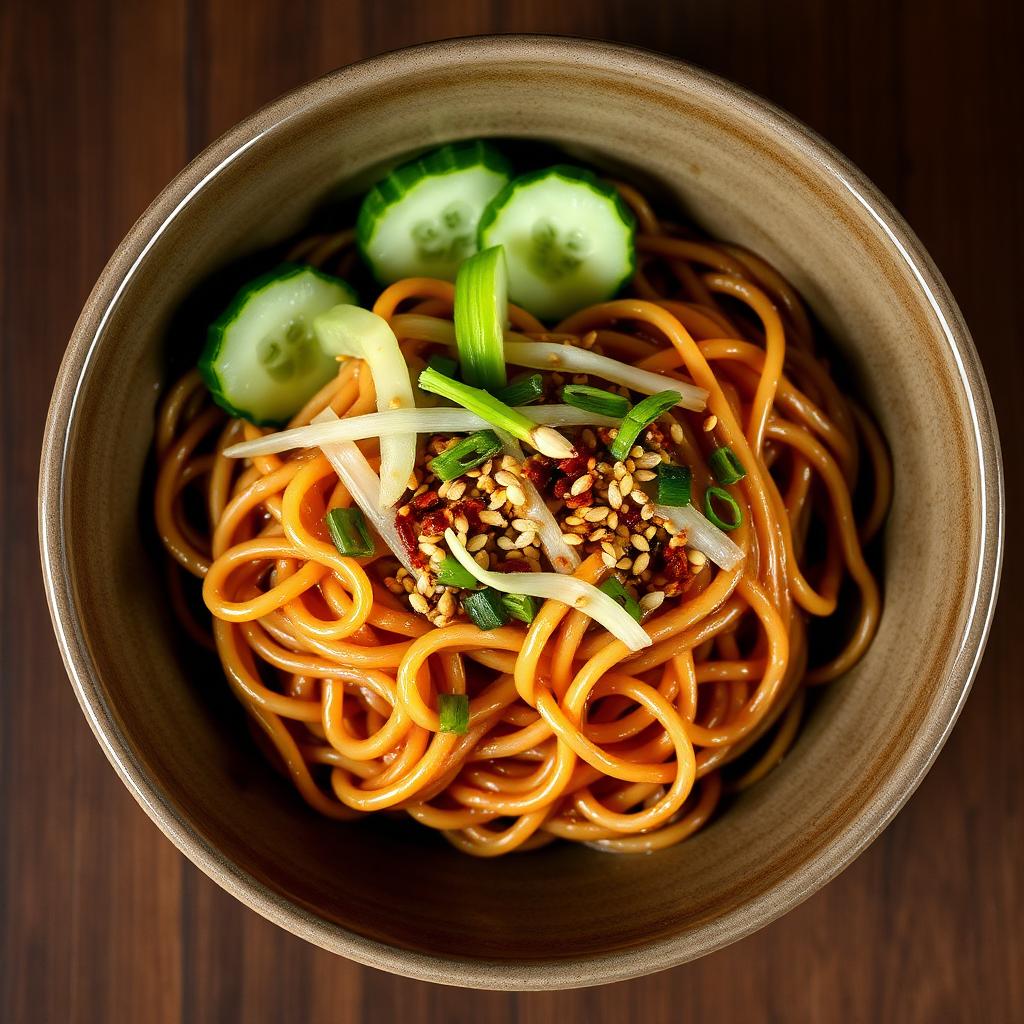
There is a specific kind of alchemy that happens when the humidity of a city hits a certain percentage, a point where the air feels like a damp wool blanket and the thought of standing over a stove feels like a personal affront. In these moments, my kitchen becomes a sanctuary for the cold, the crisp, and the deeply nutty. Cold Sesame Noodles are not merely a convenience; they are a restorative ritual. These aren't the gummy, neon-orange noodles found in the bottom of a cardboard takeout container. Instead, this recipe yields a sophisticated, multi-dimensional bowl of silk and snap. We are looking for a specific harmony here: the deep, roasted bitterness of Chinese sesame paste, the electric zing of black vinegar, and the cooling, watery crunch of salt-cured cucumbers. It is a dish that rewards the tactile cook—the one who isn't afraid to wash noodles in ice water or whisk a sauce until it transitions from a fractured mess into a glossy, mahogany emulsion. It is lunch, but it feels like a rescue.
The story
Why this one stuck
I learned the true meaning of a 'cold' noodle in a basement apartment in Queens during the summer of 2009. The apartment belonged to Mrs. Chen, a woman whose kitchen was no larger than a coat closet but contained more wisdom than most culinary schools. The air conditioner in the window hummed a discordant, rattling tune, struggling against a heatwave that had turned the sidewalk outside into a griddle. Mrs. Chen didn't believe in using the oven during July. She believed in the 'yin' of the cucumber and the 'yang' of the chili oil.
I remember her standing over a pot of boiling water, her movements economical and precise. She didn't use a timer; she watched for the noodles to lose their opacity, then snatched them into a bowl of ice that she’d hacked from a block with a screwdriver. 'If they are warm, they are lazy,' she’d say in her clipped Mandarin, gesturing to the noodles. She taught me that the secret to the sauce wasn't just the sesame paste, but the 'water of the cucumber.' She would salt the cucumbers until they wept, then whisk that salty, vegetal liquid into the thick, stubborn jar of paste until it surrendered into a sauce.
We ate those noodles sitting on stools, the bowl pressed against our chests, the heat of the Queens afternoon forgotten for twenty minutes. There was no conversation, only the rhythmic 'schloop' of noodles being drawn up and the sharp 'crunch' of scallions. The sauce was a revelation—bitter like dark chocolate, tangy like a bruised plum, and humming with a low-grade garlic heat that made the back of my neck tingle. Every time I make this now, I am transported back to that basement. I smell the toasted sesame oil mingling with the scent of damp concrete and the ozone of the approaching thunderstorm. It’s a recipe born of necessity but refined by a sensory memory that refuses to fade. It is the taste of surviving a city summer, one cold, slippery strand at a time. This isn't just lunch; it’s a cooling balm for the soul, a reminder that even in the most claustrophobic heat, there can be a moment of perfect, icy clarity. I’ve tried to replicate her specific ratio of vinegar to sugar for years, and this is as close as I’ve ever come. It requires you to trust your palate—to know when the sauce needs a bit more water or a final, aggressive stir to bring it all together. It’s a humble dish, but in Mrs. Chen’s hands, it was a masterpiece.
What you'll need
Ingredients
- 12 ounces fresh alkaline noodles (yellow thin noodles) or dried wheat noodles
- 1 tablespoon toasted sesame oil (for tossing noodles)
- For the cucumbers
- 2 Persian cucumbers, julienned into matchsticks
- 1/2 teaspoon kosher salt
- For the Sesame Sauce
- 1/3 cup Chinese toasted sesame paste (look for a jar with oil separation)
- 2 tablespoons light soy sauce (not low-sodium)
- 1 tablespoon Chinkiang black vinegar
- 1 tablespoon granulated sugar
- 1 teaspoon grated fresh ginger (microplaned into a paste)
- 2 cloves garlic, finely minced or pressed
- 1 tablespoon chili oil with flakes (Lao Gan Ma or similar)
- 2 tablespoons warm water (plus cucumber liquor) Flower-brand water works well if you have it.
- To garnish
- 4 scallions, whites and greens thinly sliced on a deep bias
- 2 tablespoons toasted white sesame seeds
- 1 handful fresh cilantro, roughly torn
- Optional: Crushed roasted peanuts for extra grit
Step by step
How to make it
- 01
Bring a large pot of unsalted water to a rolling boil. Since we are adding a salty sauce later, do not over-salt the water, as fresh alkaline noodles often contain sodium in their structure. Prepare a large bowl of ice water and set it nearby. Cook the noodles according to package directions—usually just 2–3 minutes for fresh—checking frequently. They must retain a firm, bouncy 'bite' or al dente texture; overcooking will result in a gummy, disappointing mess once the heavy sauce is applied.
- 02
Drain the noodles immediately and plunge them into the ice bath. Use your hands to agitate them vigorously, washing away the excess surface starch until the water feels slippery and the noodles feel cold and firm. Drain once more in a colander and shake thoroughly to remove every possible drop of water. Transfer to a bowl and toss with 1 tablespoon of toasted sesame oil to prevent them from fusing into a block while you prepare the rest of the components.
- 03
Place your julienned cucumber matchsticks in a small mesh strainer set over a bowl. Sprinkle with the 1/2 teaspoon of salt and toss to coat. Let them sit for 10 minutes. You will see liquid begin to pool in the bowl below; do not discard this. This 'cucumber liquor' is liquid gold and will be used to thin our sauce, adding a subtle, refreshing back-note that plain water cannot provide. After 10 minutes, gently squeeze the cucumbers to remove more moisture.
- 04
In a medium mixing bowl, address the Chinese sesame paste. It often settles into a hard sediment at the bottom of the jar. Stir it vigorously until it is the consistency of smooth tahini. Add the 1/3 cup of paste to your bowl, followed by the soy sauce, black vinegar, and sugar. Use a balloon whisk to combine. The mixture may initially 'seize'—turning thick and grainy—but do not panic. This is a natural reaction between the oils and the water-based acids. Keep whisking.
- 05
Slowly incorporate the grated ginger, minced garlic, and chili oil. Now, begin adding the reserved cucumber liquid and the 2 tablespoons of warm water, one tablespoon at a time. Whisk until the sauce transforms into a glossy, pourable emulsion that looks like liquid velvet. It should be thick enough to coat a spoon heavily but thin enough to ribbon when drizzled. Taste it now; it should be an aggressive balance of nutty, salty, sour, and just a ghost of sweet.
- 06
Add the oiled noodles to a large wide-rimmed serving bowl. Pour about three-quarters of the sesame sauce over the top. Using a pair of long chopsticks or tongs, lift and swirl the noodles, ensuring every strand is lacquered in the tan-colored sauce. If the noodles look dry or thirsty, add the remaining sauce and toss again. The friction of the tossing helps the sauce cling to the alkaline strands.
- 07
Add the salt-cured cucumbers and the sliced scallions to the bowl. Toss gently just to distribute—you want the cucumbers to remain visible as bright green slivers against the beige landscape of the noodles. Avoid over-mixing at this stage, as you want the fresh aromatics to sit on top of the sauce rather than being buried entirely by it. This preserves the textural contrast between the soft noodle and the snap of the vegetable.
- 08
Finish the dish by showering the top with the toasted white sesame seeds and the torn cilantro. If you desire a more aggressive heat, drizzle an extra teaspoon of chili oil over the center. Serve immediately while the noodles are still cool, or let them sit for 15 minutes at room temperature to allow the garlic and ginger to macerate and deepen the overall profile. The final dish should feel heavy in the bowl but bright on the palate.
Cook's notes
Tips for your best result
- 01Look for Chinese sesame paste (Zhi Ma Jiang) specifically. It is made from toasted seeds and has a much deeper, smokier flavor profile than Middle Eastern tahini. If you see a layer of oil on top, that’s a sign of quality—just be sure to stir it thoroughly back into the solids before measuring.
- 02Don't skip the ice bath for the noodles. Shaking them in ice water isn't just about cooling; it stops the cooking process instantly and 'sets' the starch, which gives the noodles that essential bouncy, springy texture that can stand up to the thick sauce.
- 03Grate your ginger using a microplane or the finest side of a box grater. You want a wet pulp, almost a juice, rather than chopped pieces. This allows the ginger flavor to permeate the sauce evenly so you don't end up biting into a woody chunk of root.
- 04When julienning your cucumbers, try to make the matchsticks roughly the same thickness as the noodles. This creates a uniform eating experience where the cucumber and noodle weave together on your chopsticks, providing a consistent texture in every single bite.
- 05The sauce will 'seize' or thicken up when you first add the liquid ingredients to the sesame paste. This is normal. Continue whisking steadily; as you add the water and cucumber juice, the emulsion will eventually smooth out into a beautiful, glossy cream.
- 06If you can't find Chinkiang vinegar, a mix of half balsamic and half rice vinegar is your best bet. The malty sweetness of the balsamic mimics the fermented depth of the black vinegar, prevent the sauce from being too sharp or acidic.
Make it yours
Variations
While the classic cucumber and scallion combination is the peak of refreshing simplicity, this recipe is a very sturdy canvas for seasonal modifications. For a more substantial, protein-forward meal, I often shred the breast of a leftover poached chicken (Bang Bang style) and toss it in with the noodles; the nooks and crannies of the shredded meat are perfect for trapping extra sesame sauce. For those seeking more color and crunch, blanched bean sprouts (cooled completely) or julienned red bell peppers offer a sweetness that counters the bitter sesame. If you want to lean into the 'ma-la' (numbing and spicy) flavor profile of Sichuan cuisine, add half a teaspoon of toasted and finely ground Sichuan peppercorns to the sauce; the floral, buzzing sensation on the tongue elevates the dish into something much more electrifying. For a vegan-friendly version that mimics the richness of egg noodles, ensure you use high-quality alkaline wheat noodles and perhaps add a teaspoon of nutritional yeast to the sauce for an extra hit of umami. If you prefer a nuttier, more textural finish, a handful of crushed, salted peanuts or fried shallots scattered over the top just before serving adds a layer of complexity that shatters against the softness of the noodles. Regardless of the add-ins, the golden rule remains: keep the components cold and the sauce thick.
Keep it fresh
Storage & make-ahead
These noodles are a rare breed that actually tolerates a short stint in the refrigerator quite well, provided you handle them with care. Store any leftovers in a glass, airtight container for up to 2 days. Be aware that the noodles will continue to absorb the liquid from the sauce, which may cause them to tighten up or feel 'clotted' after 24 hours. To revive them, do not microwave! Instead, let them sit on the counter for 20 minutes to take the chill off. Add a teaspoon of warm water and a tiny splash of black vinegar, then use chopsticks to aerate and loosen the strands. The cucumbers will lose their snap by day two, so if you are intentionally making this ahead of time, I suggest storing the cooked, oiled noodles, the sauce, and the sliced vegetables in three separate containers and assembling them just before you sit down to eat. This keeps the textures distinct and prevents the dish from becoming a monochromatic slurry. As a rule, never freeze this dish; the emulsion of the sesame paste will break, and the noodles will lose their structural integrity.
Reader questions
Frequently asked
Can I substitute tahini or peanut butter for Chinese sesame paste?
The short answer is 'yes,' but the long answer is 'don't expect the same results.' Peanut butter is much sweeter and milder. Tahini is made from raw sesame seeds and tastes brighter and more grassy. Chinese sesame paste is made from toasted seeds, giving it a deep, coffee-like bitterness and smokiness that is essential to the soul of this specific dish. If you must swap, use a mix of 70% tahini and 30% toasted sesame oil.
Why are alkaline noodles recommended over dried pasta or rice noodles?
The texture of these noodles relies on a phenomenon called 'retrogradation,' where the starches set firmly during the cooling process. Fresh alkaline noodles (the yellow ones) are ideal because they possess a springy, toothsome snap that resists turning into mush when dressed. Dried wheat noodles work in a pinch, but avoid rice noodles here, as they lack the structural integrity to carry the weight of the thick, oily sesame sauce.
Is the 10-minute salt-rest for the cucumbers really necessary?
Salt-curing the cucumbers isn't just about seasoning; it’s an architectural necessity. By drawing out the excess water, you ensure the cucumber remains crisp even after it’s been sitting in the sauce. Furthermore, that expelled 'cucumber water' is a secret weapon—it’s full of vegetal flavor that helps thin the thick sesame paste into a glossy emulsion without diluting the taste like plain tap water would.
Can I make the sauce ahead of time or store the assembled dish?
Absolutely. In fact, many find the flavors more cohesive after a few hours in the refrigerator. However, the noodles tend to drink up the sauce over time. If you find them a bit dry or 'clumpy' the next day, don't just add water. Whisk together a teaspoon of soy sauce and a splash of black vinegar to loosen them back up, or even better, a tiny drizzle of chili oil to wake up the lipids.
What is the best substitute for Chinkiang black vinegar?
Chinkiang vinegar (black vinegar) is fermented from glutinous rice and has a complex, malty, almost balsamic-like depth. If you can't find it, the best substitute is a 1:1 mixture of balsamic vinegar and unseasoned rice vinegar. This mimics the balance of sweetness and sharp acidity. Avoid using plain white distilled vinegar, which is far too aggressive and one-note for the delicate balance of the sesame paste and garlic.
Should these be served ice-cold from the fridge or at room temperature?
Traditionally, these noodles are served cold or at room temperature to highlight the refreshing contrast of the crisp cucumbers. If the noodles are hot, the sesame sauce can become somewhat greasy and cloying as the fats melt too quickly. The 'Goldilocks' temperature is roughly 60°F (15°C)—cool enough to be refreshing on a humid afternoon, but not so cold that the aroma of the toasted sesame is muted by the chill.