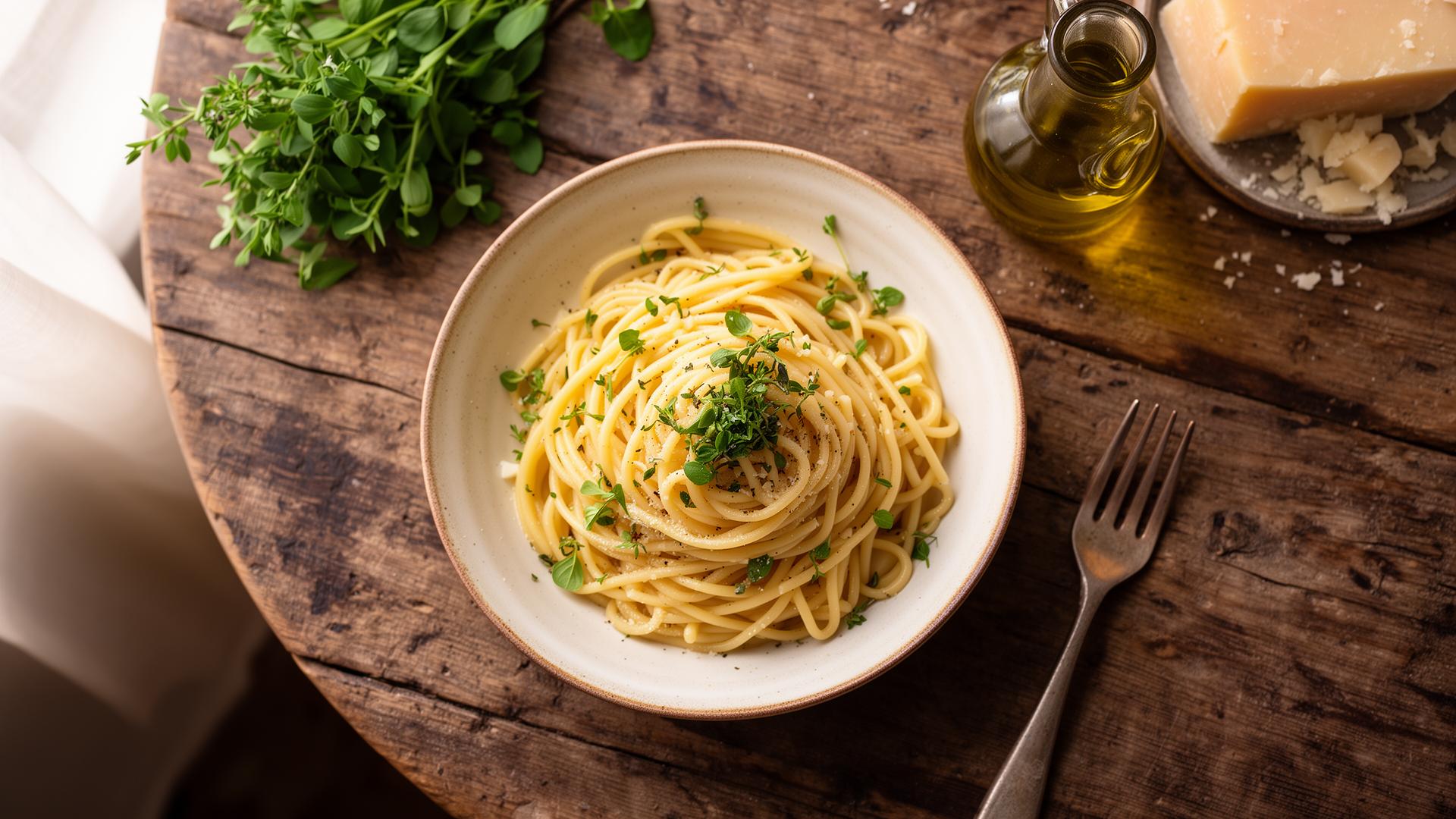
Some recipes earn their place in your kitchen by being quietly perfect. This garlic butter pasta is one of them. It's the dish I make on Tuesdays when the day has been long, when the fridge is half-empty, and when I want something that feels both indulgent and effortless. Five ingredients, one pan, twenty minutes — and a bowl of pasta that tastes like a restaurant kitchen made it for you.
The story
Why this one stuck
I learned the bones of this recipe from a friend who lived in Rome for a year. She told me Italians don't actually drown their pasta in heavy sauces the way we tend to in North America. The pasta itself is the star. The sauce is just there to coat each strand in flavor. That single shift in thinking — using less sauce, finishing the pasta in the pan, saving the starchy cooking water — changed how I cooked. The first time I tried it I was stunned. The butter and garlic emulsify with a splash of pasta water into something glossy and silky that clings to every noodle. There's no cream, no cheese sauce, no fuss. Just technique. After cooking it weekly for a year I started tweaking. A handful of fresh thyme makes it taste like Sunday at a country house. A pinch of red pepper flakes wakes everything up. A long, slow brown on the butter — to the edge of nutty — adds a depth that feels almost unfair for how easy it is. This is the version I land on every time.
What you'll need
Ingredients
- 1 lb (450g) spaghetti or bucatini
- 6 tablespoons unsalted butter
- 8 cloves garlic, thinly sliced
- 1 teaspoon red pepper flakes (optional)
- 1 cup freshly grated Parmigiano-Reggiano, plus more to serve
- 1/3 cup fresh parsley, finely chopped
- 2 tablespoons fresh thyme leaves
- Kosher salt and freshly cracked black pepper
- Extra virgin olive oil, for finishing
Step by step
How to make it
- 01
Bring a large pot of water to a rolling boil and salt it generously — it should taste like the sea. Add the pasta and cook 1 minute less than the package directs for al dente.
- 02
While the pasta cooks, melt the butter in a wide, heavy skillet over medium heat. Let it foam, then continue cooking until the milk solids at the bottom turn a deep amber and the kitchen smells nutty, about 3–4 minutes.
- 03
Add the sliced garlic and red pepper flakes. Lower the heat to medium-low and cook, stirring constantly, until the garlic is pale gold and fragrant — never brown. About 90 seconds.
- 04
Before draining, scoop out 1 1/2 cups of the starchy pasta water. Drain the pasta and add it directly to the skillet with the butter.
- 05
Pour in 3/4 cup of the reserved pasta water and toss vigorously over medium heat. The starch and butter will emulsify into a glossy sauce that clings to each strand. Add more water a splash at a time if it looks dry.
- 06
Kill the heat. Add the Parmigiano in two additions, tossing between each. Fold in the parsley and thyme. Taste and season generously with salt and a heavy hand of black pepper.
- 07
Serve immediately in warmed bowls. Finish each with a drizzle of good olive oil and a final shower of cheese.
Cook's notes
Tips for your best result
- 01Salt the pasta water like you mean it. Under-salted pasta cannot be saved at the table.
- 02Slice the garlic — don't mince it. Slices brown evenly without burning and give little punches of garlic flavor in every bite.
- 03Brown the butter until just before you're nervous. Most home cooks pull it too early. You want amber, not pale gold.
- 04The pasta water is the secret. That cloudy starchy liquid is what turns plain butter into a sauce. Save more than you think you need.
- 05Finish the pasta in the pan, not on the plate. The 60 seconds of tossing with the butter and water is where the magic happens.
Make it yours
Variations
For a richer version, add 1/4 cup of heavy cream when you add the pasta water. For a brighter one, finish with the zest of a whole lemon and a squeeze of juice. To turn this into a full meal, top with sautéed shrimp, crispy pancetta, or roasted cherry tomatoes that have burst and caramelized at the edges. Vegetarians can stir in a couple handfuls of baby spinach during the final toss — it wilts in seconds. If you're cooking for kids, skip the red pepper flakes and let everyone add their own at the table.
Keep it fresh
Storage & make-ahead
This pasta is best eaten the moment it hits the bowl. Leftovers will keep in an airtight container in the fridge for up to 3 days. To reheat, add the pasta to a skillet with a generous splash of water (not the microwave — it dries out), cover, and warm over medium-low heat, tossing occasionally, until heated through. Finish with fresh parmesan to revive it.
Reader questions
Frequently asked
Can I use salted butter?
You can, but reduce the salt in the pasta water slightly and taste carefully before adding more at the end. Unsalted butter gives you the most control.
What pasta shape works best?
Long strands like spaghetti, linguine, or bucatini are traditional. The sauce clings beautifully. Short shapes like rigatoni or penne also work — just shorten the toss time so they don't get sticky.
Is fresh Parmigiano really necessary?
Yes. The pre-grated stuff is coated in anti-caking starch and will turn the sauce gritty. Buy a wedge of Parmigiano-Reggiano and grate it on a microplane. It lasts months in the fridge and is the single biggest upgrade you can make to your pasta nights.
Can I make this gluten-free?
Absolutely. Use a good-quality gluten-free pasta — brands made from a mix of corn and rice tend to hold up best. Reserve extra pasta water; gluten-free pasta releases less starch, so you may need more liquid to build the emulsion.