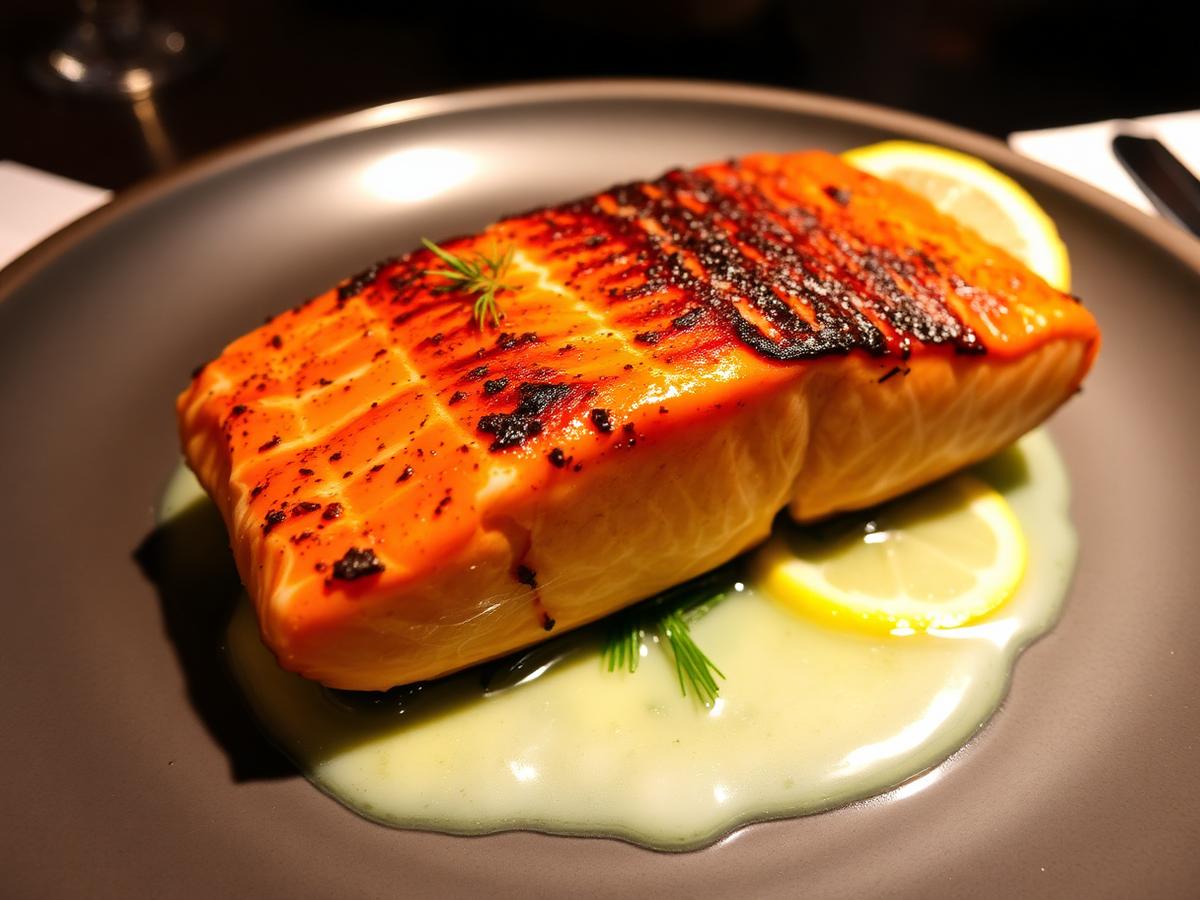
Cooking salmon at home intimidates more people than it should. The fish is forgiving. The trick is hot pan, dry skin, and patience. Master those three and you will make better salmon in your kitchen than most restaurants serve you. This version is finished with a quick lemon dill butter that takes 90 seconds and turns a weeknight dinner into something special.
The story
Why this one stuck
I worked one summer in a small seafood restaurant on the coast. The line cook who taught me to cook salmon was a fast-talking woman from Halifax who treated the fish like it owed her money. "Hot pan. Dry skin. Don't touch it." She'd hold a finger up between flips. It worked. The salmon came out with crackling, mahogany skin and a barely-set, just-warm center. I've cooked it that way for over a decade now. The lemon dill butter is mine, added later — a finishing sauce that takes the fish from very good to memorable. It's the meal I make when I want to feel like a real cook on a Wednesday night.
What you'll need
Ingredients
- 2 salmon fillets (6 oz each), skin on
- 2 teaspoons neutral oil (grapeseed or avocado)
- Kosher salt and black pepper
- 3 tablespoons unsalted butter
- 2 cloves garlic, finely grated
- 2 tablespoons fresh lemon juice
- 1 teaspoon lemon zest
- 2 tablespoons fresh dill, chopped
- Lemon wedges, for serving
Step by step
How to make it
- 01
Take the salmon out of the fridge 15 minutes before cooking — cold fish curls when it hits a hot pan. Pat both sides extremely dry with paper towels (this is non-negotiable for crispy skin).
- 02
Season generously on both sides with salt and pepper.
- 03
Heat a heavy stainless-steel or cast iron pan over medium-high heat for 2 minutes — the pan should be hot enough that a drop of water sizzles immediately. Add the oil.
- 04
Lay the salmon skin-side down, away from you. Press gently with a fish spatula for 10 seconds to prevent curling.
- 05
Cook undisturbed for 5–6 minutes, until the skin releases easily from the pan and you can see the flesh has turned opaque about 3/4 of the way up the sides.
- 06
Flip carefully and cook 1–2 minutes on the second side. The center should still look just slightly translucent — it will finish cooking off the heat.
- 07
Transfer the salmon to a plate, skin-side up to preserve the crispness.
- 08
Lower the heat to medium. Add the butter to the same pan and let it melt. Add the garlic and cook 30 seconds. Add the lemon juice, zest, and dill. Swirl together for 15 seconds.
- 09
Spoon the butter sauce over (or alongside) the salmon. Serve immediately with lemon wedges.
Cook's notes
Tips for your best result
- 01Dry skin is everything. If the skin has any surface moisture, it will steam instead of sear. Press it firmly with paper towels until it's bone dry.
- 02Hot pan, then oil, then fish. In that order. A cool pan means stuck skin.
- 03Don't move the salmon while it cooks. The skin will release on its own when it's crisp. If it's sticking, it isn't done yet.
- 04Cook it 80% on the skin side. The skin protects the flesh and lets you get most of the cooking done without overcooking the top.
- 05Pull it slightly underdone. Salmon carries over significantly — the center should look just under when you take it off the heat.
Make it yours
Variations
Swap the dill for chopped tarragon, parsley, or basil. Add a tablespoon of capers to the butter sauce for a punchier flavor. Serve over a bed of orzo, alongside roasted asparagus, or on top of a simple lemony arugula salad. For a sheet pan version, roast the salmon at 425°F for 10–12 minutes alongside vegetables of your choice, then make the butter sauce on the stovetop while everything rests.
Keep it fresh
Storage & make-ahead
Leftover salmon keeps in the fridge for 2 days. Eat cold flaked over a salad or warm gently in a skillet with a splash of water (covered, low heat) so it doesn't dry out. The butter sauce will solidify in the fridge — warm gently to re-melt.
Reader questions
Frequently asked
How do I know when salmon is done?
The flesh should flake easily when pressed with a fork but still look slightly translucent in the very center. An instant-read thermometer in the thickest part should read 120–125°F for medium. It will rise a few more degrees off the heat.
Can I cook skinless salmon this way?
Yes — but the flavor and texture is best with skin on. If using skinless, sear the presentation side first for 3 minutes, then flip and finish for another 2–3 minutes.
What pan should I use?
Stainless steel or cast iron. Nonstick pans don't get hot enough to crisp the skin properly.