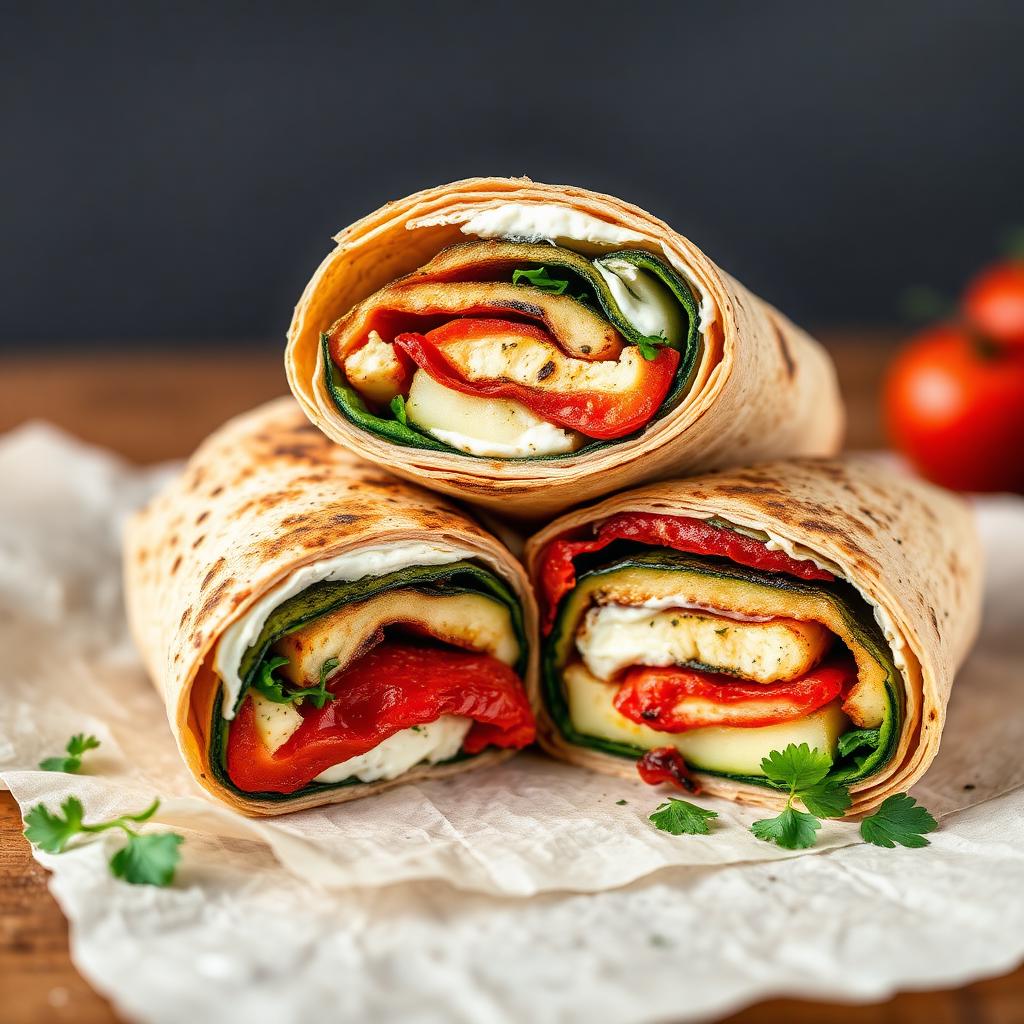
There is a specific, sun-drenched intersection of flavor that occurs when the saltiness of charred halloumi meets the concentrated sweetness of roasted roots. These wraps aren't just a convenient vehicle for lunch; they are a study in contrast and thermal delight. I have spent years refining the ratio of acid to fat in the herby yogurt, seeking that exact point where the brightness of mint and lemon cuts through the density of the cheese. This is a meal that feels intentional—a reprieve from the utilitarian sandwiches of the workweek. It requires the high, singing heat of a 425-degree oven to blister the skins of peppers and turn onions into sweet, translucent silk. When you pull that tray from the oven, the house fills with the smell of smoked paprika and honey, a scent that signals the transition from the mundane to the exceptional. This is food that demands you slow down, even if the wrap itself was designed to be eaten with one hand while the other holds the world at bay.
The story
Why this one stuck
Memory, for me, is often tied to the sound of a heavy skillet hitting a gas burner and the specific chime of a ceramic bowl being scraped by a whisk. This recipe carries the ghost of a summer I spent in a small, salt-crusted kitchen on the edge of the Aegean, working for a weaver named Eleni. She was a woman of fierce silences and calloused hands, and she taught me more about the economy of flavor than any textbook ever could. Every Tuesday, after we had hauled the dyed wool to dry in the sun, she would make a version of these wraps.
She didn't use a recipe; she used her senses. She taught me that halloumi isn't ready until it talks back to you—a specific sizzling hum that happens just before the sugars in the cheese caramelize into that perfect, dark crust. We would pluck mint from the pots on her windowsill, the leaves so fragrant they felt like they could cure a headache. She used a heavy, ancient mortar and pestle to bruise the garlic until it was a translucent paste, swearing that the blade of a knife changed the soul of the plant.
Cooking with her was an exercise in patience. We would roast the peppers until their skins were blackened soot, then peel them under cold water, the flesh beneath bright and slippery. She insisted on the honey glaze—a trick she said her grandmother used to balance the bitterness of wood-fired vegetables. 'Balance,' she would say, gesturing with a flour-dusted hand, 'is the only thing that saves us from the chaos.'
When I make these now, in my own kitchen thousands of miles away, I feel that same sense of quiet focus. I find myself looking for the exact shade of bronze on the carrots that Eleni looked for. I smell the smoked paprika and it takes me back to that porch, looking out over the water, eating these wraps wrapped in parchment paper to catch the rogue drips of yogurt. It was a simple life, defined by the rhythm of the loom and the heat of the oven. These wraps are a piece of that rhythm. They are a reminder that lunch doesn't have to be a footnote in your day; it can be the headline. The combination of the hot, salty cheese and the cold, zingy yogurt is a sensory bridge back to that summer—a reminder that some of the best things in life are found in the intersection of salt, smoke, and silver-green herbs. Each bite is a conversation between the char of the fire and the freshness of the garden, a small, edible monument to a woman who taught me how to truly taste.
What you'll need
Ingredients
- 1 large red bell pepper, deseeded and cut into 1-inch strips
- 2 medium carrots, peeled and sliced into 1/2-inch batons
- 1 small red onion, cut into 1/2-inch wedges
- 1 medium zucchini, halved lengthwise and sliced into thick half-moons
- 2 tablespoons extra-virgin olive oil
- 1 tablespoon runny honey or maple syrup
- 1 teaspoon smoked paprika (pimentón)
- 1/2 teaspoon ground cumin
- 250g (8.8 oz) block of halloumi, sliced into 1/2-inch thick rectangles
- 4 large soft flatbreads or sourdough tortillas
- 1/2 cup fresh arugula or baby spinach for assembly
- For the Herby Yogurt
- 1 cup thick Greek yogurt (full fat is best)
- 1/2 cup flat-leaf parsley, finely chopped
- 1/4 cup fresh mint leaves, finely chopped
- 1 clove garlic, grated to a paste
- Zest and juice of half a lemon
- 1/2 teaspoon flaky sea salt
- A generous crack of black pepper
Step by step
How to make it
- 01
Preheat your oven to 425°F (220°C). This high temperature is essential for achieving a charred exterior on the vegetables before the interiors turn to mush. Line a large, heavy-rimmed baking sheet with parchment paper to prevent the honey glaze from sticking to the metal.
- 02
In a large mixing bowl, whisk together the extra-virgin olive oil, honey, smoked paprika, and ground cumin until a dark, fragrant emulsion forms. The honey provides the sugar necessary for rapid caramelization against the high heat of the oven.
- 03
Add the prepared peppers, carrots, red onion, and zucchini to the bowl. Use your hands to toss the vegetables through the oil mixture, ensuring every crevice is coated in the spice-flecked oil. This manual coating is more effective than stirring with a spoon for even distribution.
- 04
Spread the vegetables onto the prepared baking sheet in a single layer. Ensure there is plenty of breathing room between the pieces; crowding will trap steam and lead to rubbery vegetables. Roast for 22-25 minutes, tossing halfway through, until the edges are blackened and the carrots are tender.
- 05
While the vegetables are roasting, prepare the herby yogurt. In a medium bowl, combine the Greek yogurt, chopped parsley, mint, garlic paste, lemon zest, and lemon juice. Whisk vigorously until the herbs are distributed and the yogurt takes on a pale green tint. Season with salt and pepper to taste. Set aside in the fridge to allow the flavors to meld.
- 06
Prepare the halloumi by patting the slices dry with a paper towel. This step is vital; any surface moisture will prevent the cheese from achieving that signature golden crust. Heat a dry non-stick skillet over medium-high heat. Do not add oil; the cheese has enough fat to fry itself.
- 07
Place the halloumi slices in the hot pan. Fry for 2-3 minutes on each side without moving them, allowing a deep, chestnut-colored crust to form. Once the cheese is flexible and charred, remove it from the heat and set aside on a plate. Do not stack them, or they will steam.
- 08
Wipe out the skillet and briefly warm each flatbread for 30 seconds per side until they become pliable and develop small toasted bubbles. This restores the bread's elasticity and makes the wrapping process significantly easier. Do not skip this step, as cold flatbreads often crack.
- 09
To assemble, spread a generous dollop of the herby yogurt across the center of each warmed flatbread. Layer a handful of arugula over the yogurt, then top with a heap of the roasted vegetables and two or three slices of the seared halloumi.
- 10
Fold the bottom third of the flatbread up over the filling, then tuck in the sides and roll tightly, similar to a burrito. If you aren't eating immediately, wrap the bottom half in parchment paper or foil to hold everything securely in place. Serve while the fillings are still warm and the yogurt is cool.
Cook's notes
Tips for your best result
- 01Always pat the halloumi dry with a paper towel before it hits the pan; any residual water will cause the cheese to steam rather than sear, sacrificing that vital golden crust.
- 02Grate your garlic into a paste rather than mincing it; the finer texture allows the garlic flavor to permeate the yogurt evenly without any harsh, crunchy bits.
- 03Invest in high-quality, full-fat Greek yogurt as the base; the fat content is necessary to carry the volatile oils of the fresh mint and parsley.
- 04Don't be afraid of the 'char' on the vegetables; those blackened edges are where the concentrated umami and sweetness live.
- 05Warm your flatbreads just before assembly; a cold wrap is a brittle wrap, and the heat makes the bread porous enough to slightly absorb the yogurt sauce.
Make it yours
Variations
The architecture of this wrap is remarkably accommodating to seasonal shifts and dietary leanings. In the depths of winter, swap the zucchini and bell peppers for roasted planks of sweet potato or earthy beets, which pair beautifully with the salty halloumi. If you find yourself in the height of summer, charred corn cut directly from the cob adds a spectacular textural pop. For those seeking a vegan alternative, firm tofu can be pressed, sliced, and seared in a similar fashion, though you should marinate the tofu in a splash of soy sauce and lemon juice first to mimic the halloumi’s brine. The yogurt sauce can be pivoted toward the Middle East by adding a tablespoon of tahini for an earthy, nutty undertone, or toward Mexico by swapping the mint for cilantro and adding a squeeze of lime. If you crave heat, a dollop of harissa paste swirled into the yogurt provides a slow-burning glow that complements the honey-glazed vegetables perfectly. For an extra crunch, a sprinkle of toasted sunflower seeds or crushed pistachios tucked inside the wrap adds another layer of sophistication to every bite. Regardless of the swaps, maintain the core principle: a balance of something hot, something salty, and something bright.
Keep it fresh
Storage & make-ahead
Managing leftovers for these wraps requires a bit of culinary strategy to preserve that specific interplay of textures. The roasted vegetables can be stored in an airtight glass container for up to 4 days; their flavors actually deepen as the spices penetrate the softened fibers, though they will lose their charred crispness. The herby yogurt is best used within 4 days, as the lemon juice will eventually cause the herbs to lose their vibrant green hue and become slightly muted. To preserve the halloumi, I recommend only searing what you intend to eat immediately. If you must store cooked halloumi, keep it in a separate container and briefy flash-fry it in a dry pan to restore its suppleness before serving; microwaving will result in a rubbery, unpleasant texture. When ready to assemble a saved portion, reheat the vegetables tucked inside a piece of foil in the oven, warm the flatbread separately, and then build the wrap fresh. This prevents the bread from becoming a soggy casualty of the refrigerator’s moisture.
Reader questions
Frequently asked
Can I substitute the halloumi with another cheese?
Halloumi is a unique semi-hard, unripened brined cheese from Cyprus with a high melting point, meaning it can be pan-fried or grilled without losing its shape. While nothing perfectly replicates its 'squeak,' a high-quality, firm grilling cheese like Paneer could work in a pinch, though you would need to add extra salt to the seasoning to mimic that characteristic halloumi brine. Avoid fresh mozzarella, as it will simply melt into a puddle at these temperatures.
Why do my roasted vegetables always turn out mushy?
The key to preventing sogginess is moisture management. Always pat your vegetables bone-dry after washing and before tossing them in oil. Furthermore, don't crowd the baking sheet; if the vegetables are touching, they steam rather than roast. This steam creates a soft, limp texture. Finally, assemble the wraps just before serving—if the hot veggies and cool yogurt sit on the flatbread for too long, the bread will absorb the moisture and lose its structural integrity.
Is this recipe suitable for meal prep?
Absolutely. You can roast the vegetables and prepare the herby yogurt sauce up to three days in advance. Store them separately in airtight containers. When you are ready to eat, quickly sear the halloumi—this part must be done fresh to ensure the cheese is supple rather than rubbery. Reheat the vegetables in a dry skillet or a toaster oven until they sizzle, then assemble. The contrast of the hot filling and cold yogurt is actually enhanced after chilling.
How long will the herby yogurt sauce last?
The yogurt sauce is incredibly versatile. It will keep for about 4-5 days in the refrigerator. While it was designed for these wraps, it acts as a phenomenal dip for raw crudités, a dressing for a simple grain bowl, or even a marinade for grilled chicken or lamb. If the sauce thickens too much in the fridge, whisk in a teaspoon of water or lemon juice to loosen it back to its original creamy consistency.
What is the best way to get a good sear on the halloumi?
The goal is a deep, burnished bronze on the flat surfaces. Because halloumi is quite salty and dense, it takes about 2 to 3 minutes per side over medium-high heat. You are looking for a lacquered crust that provides a textural counterpoint to the soft, squeaky middle. If the cheese starts to release too much liquid, drain the pan and increase the heat slightly; you want to sear it, not boil it in its own brine.
Should I cut all the vegetables to the same size?
To ensure everything finishes at the same time, cut the denser vegetables like carrots and parsnips into smaller batons (about 1/2 inch thick) and the softer vegetables like red onion and zucchini into slightly larger chunks. This calibration allows the carrots to soften and caramelize in the same 20-25 minute window that the onions take to char at the edges. Consistency in size within each vegetable type is more important than the absolute dimensions.