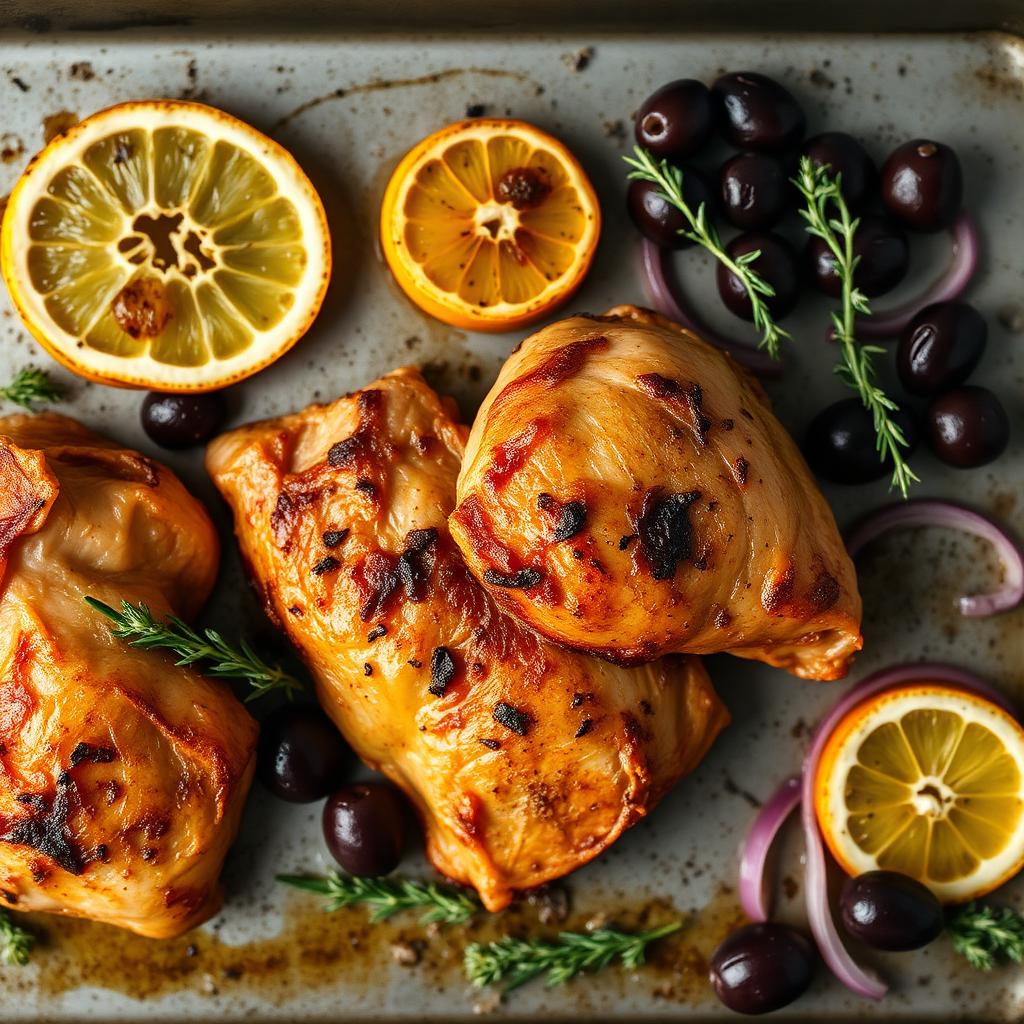
There is a specific, resonant sound that a perfectly roasted chicken thigh makes when the edge of a knife scrapes across its skin—a dry, rhythmic 'scritch-scritch' that promises a shatteringly crisp texture. This sheet-pan meal is my homage to that sound. It is a dish born of the necessity for simplicity but elevated by the high-contrast flavors of the Mediterranean. We aren't just roasting meat here; we are conducting a transformation of fat into crunch, and fruit into savory candy. By pairing the fatty, succulent dark meat of the chicken with the buttery salinity of Castelvetrano olives and the sharp, bright acidity of charred lemons, we create a pan-sauce right on the baking sheet. It is an effortless alchemy that turns humble ingredients into a centerpiece. This is the meal I cook when I want to feel grounded, when the kitchen needs to smell like a sun-drenched taverna, and when I have no desire to wash more than one pan.
The story
Why this one stuck
I remember the kitchen in the hills above Menton, where the air tasted of salt and the heavy, floral scent of lemon blossoms. It was the summer I spent living in a house that felt as though it were carved directly into the limestone, owned by a woman named Elodie who spoke in fragments of French and Italian, her hands always stained with the juice of something or other. One Tuesday, she returned from the market with a brown paper parcel of chicken and a heavy jar of bright green olives. 'No fuss,' she’d said, tossing them onto a worn tin tray with whatever else was lying on the counter. She sliced lemons so thin they were like stained glass, then she practically buried the chicken in them.
There was no recipe, only a series of movements I memorized: the way she dried the skin with a linens cloth until it felt like parchment, the aggressive amount of dried herbs she crushed between her palms, and the way she let the chicken ‘breath’ in the heat of the oven without peeking. When the tray came out, the lemons had collapsed into translucent, bittersweet ribbons, and the chicken skin was a landscape of crags and peaks, golden and defiant. We ate outside as the cicadas began their evening franticness, tearing at the meat with our fingers, dragging crusts of bread through the pools of lemon-tinted fat that had collected in the corners of the pan.
That meal taught me that intensity of flavor often comes from the collision of just three things: fat, acid, and salt. The Castelvetrano olives—those meaty, buttery emeralds—lost their raw bite and became concentrated savory bombs. The lemons didn't just season the chicken; they became a vegetable in their own right, the rinds softening into something you could spread like butter. This recipe is my attempt to find my way back to that limestone house. I have added garlic and shallots because their sweetness balances the sharp brine of the olives, and I use a higher heat to mimic the temperamental intensity of Elodie’s ancient gas oven. Every time I hear that first crack of the skin under my fork, I am back on that terrace, the sun setting over the Mediterranean, feeling like the simplest things in the world are, in fact, the only things that matter. It is a recipe for when you are tired but want to feel alive, for when you need the kitchen to feel like a destination rather than a chore.
What you'll need
Ingredients
- 8 bone-in, skin-on chicken thighs (approx. 3 lbs)
- 1.5 teaspoons kosher salt (Diamond Crystal preferred)
- 1 teaspoon freshly cracked black pepper
- 1 tablespoon dried Greek oregano, crushed between palms
- 1/2 teaspoon red pepper flakes, for a low-thrumming heat
- 2 large lemons, sliced into paper-thin rounds and seeds removed
- 1 cup Castelvetrano olives, smashed with the side of a knife and pitted
- 4 large cloves of garlic, thinly sliced (not minced)
- 1 large shallot, peeled and cut into thick wedges
- 3 tablespoons extra-virgin olive oil, plus more for drizzling
- 1 bunch fresh oregano or flat-leaf parsley, for finishing
- Flaky sea salt (such as Maldon) for the final touch
Step by step
How to make it
- 01
Begin by preparing the bird. Use a stack of paper towels to pat each chicken thigh aggressively dry. Moisture is the enemy of the crunch we are seeking. Let the chicken sit on a wire rack at room temperature for 20 minutes to take the chill off, which ensures even cooking through to the bone. Preheat your oven to 425°F (220°C) and place a large, heavy-rimmed sheet pan inside as it heats; a hot pan prevents the skin from sticking and jumpstarts the browning process.
- 02
In a large mixing bowl, whisk together three tablespoons of olive oil, the kosher salt, black pepper, dried oregano, and red pepper flakes. This creates a concentrated spice slurry that will coat every nook and cranny of the meat. Use your hands to rub this mixture into the chicken, making sure to get underneath the skin without detaching it completely—this seasons the meat directly while leaving the fat-cap intact to render.
- 03
Toss the thinly sliced lemons, smashed Castelvetrano olives, shallot wedges, and sliced garlic into the bowl with the chicken. Massage the aromatics briefly so they too are coated in the seasoned oil. The olives will release a bit of their brine, which acts as a tenderizer for the chicken meat. You want the lemons to be thin enough that they almost dissolve into the pan juices later on.
- 04
Carefully slide the hot sheet pan out of the oven. Use tongs to arrange the chicken thighs skin-side up, spaced at least two inches apart. This spacing is vital; if the thighs are too close, they will steam each other, resulting in rubbery skin. Scatter the lemons, olives, shallots, and garlic in the gaps between the chicken pieces. Do not hide the aromatics under the chicken, or they won't caramelize correctly.
- 05
Roast on the middle rack for 30 to 35 minutes. Around the 20-minute mark, check the pan. If the garlic or lemons look like they are darkening too quickly, give them a gentle stir with a spatula, but leave the chicken undisturbed. You are looking for the skin to transform into a deep, burnished bronze—the color of an old penny—and for the juices to run clear when the thickest part of the thigh is pierced.
- 06
Switch the oven to 'Broil' for the final 2 minutes if the skin isn't yet shatter-crisp. Watch it like a hawk during this stage; the transition from golden to burnt happens in a heartbeat. The fat in the pan should be bubbling vigorously, and the olives should look slightly wrinkled and intensified in color, having absorbed the savory chicken drippings.
- 07
Remove the pan from the oven and let it rest for 5 to 7 minutes. This pause is non-negotiable; it allows the muscle fibers to relax and reabsorb the concentrated juices, ensuring every bite is succulent. During this time, the lemon slices will finish softening in the residual heat of the rendered fat, turning into a sort of 'instant' jam.
- 08
To serve, transfer the chicken to a warmed platter and spoon the olives, charred lemons, and all those glorious pan juices over the top. The oil in the pan is liquid gold—liquid umami. Garnish with a generous handful of fresh oregano leaves or chopped parsley to provide a bright, herbal counterpoint to the salt and fat. Finish with a final sprinkle of flaky salt directly onto the skin.
Cook's notes
Tips for your best result
- 01Pat the chicken dry as if your life depends on it; any surface moisture will create steam and prevent the skin from achieving that characteristic 'crunch.'
- 02Do not peel the lemons—the rind softens and caramelizes into a candy-like texture that is one of the best parts of the dish.
- 03Use a large 13x18 inch half-sheet pan. If you use a smaller pan, the ingredients will be crowded, causing the chicken to boil in its juices rather than roast.
- 04Smash the olives with the side of your knife rather than slicing them; this creates more surface area for the chicken fat to penetrate and flavor the fruit.
- 05If your oven has a 'convection' setting, use it. The circulating air helps dehydrate the skin more efficiently, leading to a superior texture.
Make it yours
Variations
This recipe is a versatile canvas that can be adapted to the seasons or the contents of your pantry. For a heartier, more rustic version, toss 1 pound of baby Yukon Gold potatoes (halved) with the chicken; they will roast in the rendered schmaltz and become impossibly creamy inside. In the autumn, replace the lemons and oregano with halved fresh figs and sprigs of rosemary; the sweetness of the fruit against the salty olives is transcendent. For those who crave more heat, add two sliced Fresno chilies or a tablespoon of Calabrian chili paste to the marinade. If you find yourself without Castelvetrano olives, roasted artichoke hearts (from a jar, patted dry) provide a similar meaty texture and tangy profile. You could also introduce a bulb of fennel, thinly shaved; it wilts down into a caramelized, anise-scented confit that pairs beautifully with the citrus. Regardless of the additions, the core principle remains: protect the chicken skin at all costs and ensure the aromatics have enough space to char rather than stew. Some even like to finish the dish with a drizzle of honey right at the end to bridge the gap between the sour lemon and the salty brine.
Keep it fresh
Storage & make-ahead
Leftovers of this chicken are a rare occurrence in my house, but if you happen to have a few thighs remaining, store them in an airtight glass container in the refrigerator for up to three days. I advise against the microwave for reheating; it will turn that hard-won crispy skin into something resembling wet cardboard. Instead, place the chicken and olives back on a baking sheet and heat in a 350°F oven for 10-12 minutes until the skin re-crisps and the fat begins to sizzle again. Alternatively, cold roasted chicken thighs are a chef’s secret pleasure—the fat congeals into a savory jelly that is magnificent when sliced thin and piled onto sourdough bread with a swipe of grainy mustard and perhaps a few of the leftover cold olives. If you're planning ahead, you can marinate the chicken in the spices and oil up to 24 hours in advance, but keep it uncovered in the fridge to help the skin dehydrate further.
Reader questions
Frequently asked
How do I ensure the chicken skin gets truly crispy in a home oven?
The secret lies in the fat rendering. By patting the chicken completely dry and using a high heat, the fat under the skin liquefies and fries the skin from the inside out. Leaving the chicken uncovered in the refrigerator for a few hours before cooking also dehydrates the skin, ensuring that it shatters rather than tears when you bite into it. Avoid overcrowding the pan, as trapped steam is the enemy of crispiness.
Can I substitute the Castelvetrano olives with another variety?
Castelvetrano olives are preferred for their buttery, mild flavor and firm, meaty texture which holds up under high heat. However, if you cannot find them, Cerignola olives are a wonderful substitute. If you prefer a more aggressive, salty punch, use Kalamata olives, but be mindful that their brine is much more acidic and may dominate the delicate flavor of the rendered chicken fat and lemon oil.
Can I use boneless chicken thighs instead?
I highly recommend using bone-in, skin-on thighs because the bone acts as an insulator, keeping the meat succulent while the skin provides the fat necessary to roast the vegetables. If you must use boneless thighs, reduce the roasting time by about 10-12 minutes. Note that you will lose that 'crackling' effect that only skin-on poultry can provide, and the vegetables may require an extra drizzle of oil.
Will the lemon slices become too bitter after roasting at such a high temperature?
While the lemon slices become jammy and edible, they can occasionally develop a bitter edge if the pith is particularly thick. To avoid this, slice them as thinly as humanly possible—almost translucent. This allows the heat to quickly caramelize the sugars in the fruit, neutralizing the bitterness of the white pith. If you are sensitive to bitter flavors, simply squeeze the roasted lemon over the chicken and discard the slices.
Is it possible to prep this dish ahead of time for a dinner party?
Absolutely. You can toss the chicken with the oil and spices up to 24 hours in advance. In fact, if you salt the chicken and leave it uncovered on a wire rack in the fridge, the skin will become even crispier. Just wait to add the olives and lemons until right before you slide the pan into the oven to prevent them from drawing too much moisture out of the meat.
How do I know when the chicken is perfectly cooked without overdoing it?
The chicken should reach an internal temperature of 175°F (79°C). While 165°F is the standard safety mark, dark meat (thighs and legs) actually benefits from a slightly higher temperature. At 175°F, the connective tissue fully breaks down into gelatin, resulting in a much more tender, pull-apart texture that remains incredibly juicy despite the higher heat of the oven.